• Malibu’s changing landscape
    resulting from a recent influx of “mega” restaurants is making this full time
    resident quake in her Uggs. How soon before all of the “character” of Malibu is
    squeezed out by globally popular celebrity chefs and their enterprises?  On the East end Nobu and Mr. Chow’s has
    imported visible corporate streaming, which in order for it to be “worthwhile”
    requires dense traffic and quick turnover, group sales and “bust the piggy
    bank” price points.

     Squab lettuce cups, bigeye and
    bluefin toro tartar with caviar, and artichoke “Oshitashi” salad, are all
    delights, but in no way would live up to their price tag if the quality of service,
    bar and acoustics could not support them. As a diner, and imbiber, I think the
    comprehensive experience of these establishments is successful, and warrant the
    shock value of the bill

    Equally important to me is
    that Nobu, and Chow’s offer “backyard” dining options for those of us who are jonesing
    for some fine eggroll, but who don’t want to leave Malibu for the satisfaction.
    I am one for intimate dining (and good “slow food”), but I also embrace something
    feisty and with pizaz. Simply put: sex appeal. A little glamorous dining invites
    economic value to Malibu, as well a grand stand for socializing and people
    watching! If only I were a “someone” who could get a reservation at the last
    moment! Apparently I have not broken into that code. Yet. Putting my ego aside
    (who me?) I can embrace the “newbies” as part of my “California Dream,” and
    certainly even more so once the smug “new kid” in town attitude fades.

    For the most part these
    venues provide a win-win for the proprietors, Malibuites and commuters.
    However, above all, they must collectively insist on the first rule of the
    road: confirm your designated driver! Face it: with PCH as the main tributary
    for travel most locals cannot walk home! As my mother told me: carry a cab
    company’s number in your phone.

    On the West end and more than
    a year old, the notable newcomer that is neither culinary nor licensed for
    alcohol dispensing, but which does provide for schmoozing, snacking, book
    shopping and opportunity for insight is the family owned Bank of Books.

     Located on the corner of the
    Pt. Dume Plaza across from Lily’s for legendary breakfast burritos, and two
    doors down from Sunlife Organics for a “Million Dollar Smoothie,” Bank of Books
    is a viable destination hitched to the rear of Cafecito Organico, and a
    location that assumes an important role as the center of the Plaza’s goings on.
    Outside, people chill on newly installed outdoor furniture with deep seats;
    inside amidst the humble veneered wooden bookshelves salvaged from a retired “Borders”
    people speak in quiet tones while thumbing thru the merchandise. Thanks to the
    coffee shop the joint is outfitted with a long community table bearing several
    stools where individuals and groups gather to ‘muse’.  “Bank of Books” feels like a combination cafe,
    library, bookshop, and after school hangout. That’s because it is.

    “It’s a community
    driven bookstore,” says longtime Mallibuite and manager Ann Vandy. What she
    means is, the store is not publisher driven, but rather “offers selections
    based on what the community requests.” “Young Adult,” “Swords and Sorcery,” and
    “Children’s” and “Research” shelves point to the fact that families frequent
    this local bookshop. For DAD who wants young Johnny to know what it was like to
    research without “Google” –Encyclopedia Brittanicas sit on the top shelf behind
    the cash register.  Nearby: an archive of
    “Surfer” journals.  Cookbooks are next to
    the coffee pick up. “California’ and “Local History” in plain sight.  

    With 25% of the books used, locals can usually find
    something discounted. The real bargain begins with the “Beach Books” paperbacks
    positioned in crates on the patio, making it easy for coffee drinkers, smoothie
    gulpers, and “Subway” eaters to browse thru. Romance, mystery and “who dunnit”
    pulp; no one really cares if a little spirulina dribbles onto a copy of a
    “007”. But hey, if you like it—buy it for three buck and support your local
    bookstore.

    Contrary to the name of the bookstore, I think the
    stacks are sort of slim, albeit a predictable outcome for most bookstores since
    “brick and mortar” is being replaced by online sources. My hunch is that may
    not matter here because Ann keeps the place hopping with customers who attend book
    clubs, live author’s book signings and literary talks.

    For me, the true fireworks happen every six weeks on
    “Poetry Night.”  Organized by Ann and her
    daughter Krystyn Lambert “Poetry Night” is so popular there is barely standing
    room once the hour and a half of reading begins. As of this morning the sign up
    list for reading has no openings until late April.  

    Writers as readers and readers as writers provide for material
    that is as diverse as the locals who show. The fact is, anyone can read just
    about anything, as long as it stays within the time allotted.

    A Malibu Mom whose material is reminiscent of a
    stand-up sketch “kvetches” about her terrorizing sons; a man reads a personal
    essay about the rare gold fish his brother gave him as a “peace” gift after
    years of estrangement.  Another reads a
    poem about a love affair that should have ended long ago, but hasn’t!  Another tells the descriptive tale of the last
    night a husband spends with his wife of 25 years before he leaves her. An actor
    reads Kerouac. Always: applause, applause, applause. While you get the sense
    most of the readers have always written, you also see the exhilaration for
    those who are not accustomed to reading at the mike. It feels good to share the
    secret, and to have a stranger share their secret with you.

    Bank of Books is an experience as far away from
    corporate size sushi as you can get. It is homey, low keyed, community
    supportive, and perhaps for some, a little therapeutic.  In fact the readers, the listeners and the
    management all seem thrilled to have a place to go to. While so many of us move
    to Malibu to get away “from it all” sometimes the isolation can be daunting. At
    Bank of Books on “Poetry Night” it is hard to imagine any one of us might feel
    alone.

    Malibu continues to amaze.
     

  • Photo (10)
    West Ender Malibuites
    exchanged sweats, Ugg boots, and hoodies for shorts, bikinis and sun hats today
    as the thermometer climbed towards the 80-degree marker. Finally, a break. More
    than a break: the best of a summer’s day!

    It seems like So Cal has been
    trapped in an arctic chill since Thanksgiving with consistent daytime temperatures
    hovering 50-something degrees, nights touching the 30’s, and paired with a wind
    chill blowing off the ocean, slapping at our backs. Sniffles, sore throats and
    the flu make for uncooperative socializing, let alone lots of missed school
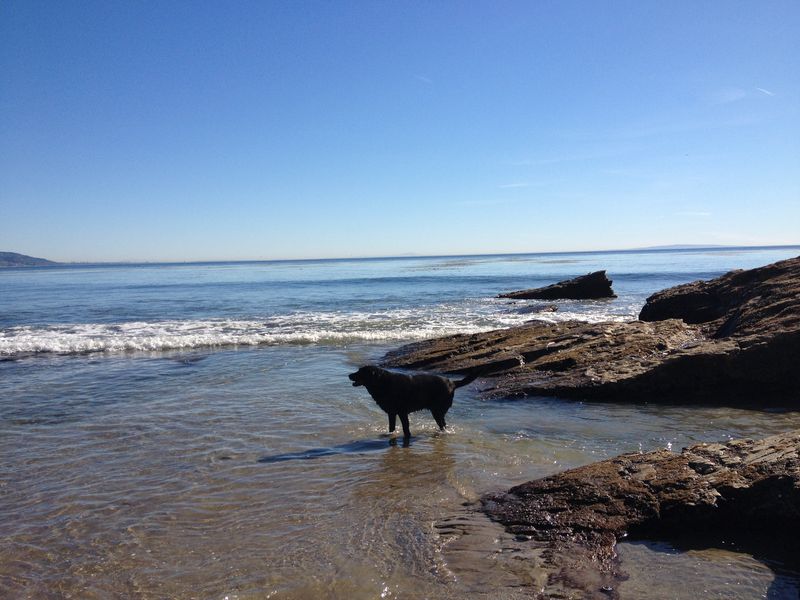
    days. But today, January 19, the vibe at Little Dume is “chill” and one of
    relief.  You can almost hear a big sigh,
    like an exhale of a pranayama yoga breath.

     At eleven this morning, with barely
    a breeze nor swell, barebacked boarders glide across the glassy bay.  Solo, or in pods, they rhythmically dip and
    pull, dip and pull—alternating from arm to arm, maintaining a straight line,
    heading East or West. 

    The tide line eases from a
    6.5 to a -1.4, more than enough to expose the shoreline’s underwater cacophony
    of vivid organic colors: the potent green of kelp and algae; the breathing
    purples and orange backs of the starfish; the chocolate and umber spikes of the
    urchin. This winter’s receding tide cycle is providing a major moonscape of
    sediment that angles and juts out of wet and dry sand. Off leash (don’t
    snitch!) local dogs and residents take their time meandering thru the
    sculptural forms, pausing now and then for—well, just to pause. And maybe take
    a photo for the spectacularity of it all. 

    We had the honor to photograph
    a woman with her daughter and an exchange student from Italy. “Bon giorno!” I
    exclaimed, meaning it and feeling a little silly, and not. After all, everyone
    knows the greeting, but how often do you get to say it on a Malibu beach?  Moreover, how often does a young person from a
    foreign country much, much older than ours, with some of the greatest pieces of
    art and treasures the world has ever known, get to experience a place called
    “Malibu”?  I bet she felt she “landed”
    her own kind of treasure today: different from Rome, or the Amalfi Coast, or
    Tuscany. But special.

     My Malibu exists beyond mere celebrity groove and tops out at 
    one of the “grooviest” environments
    (micro climates and all), on this planet. What a place to come home to! This
    exchange student and her new family seemed to feel this way too, as they smiled
    from ear to ear for their photo op on a warm beach in January!

     Such a gift for this person,
    and anyone for that matter, who is lucky enough to dip their toes in the
    Pacific, alongside the indigenous water fowl, the ashes of seaweed, and the
    astoundingly beautiful asterias vulgaris creatures of the sea.


  •  

    DSC_0285

    6a010535e8c6c2970c017ee767d2a1970d

    Photographs by Julie Ellerton

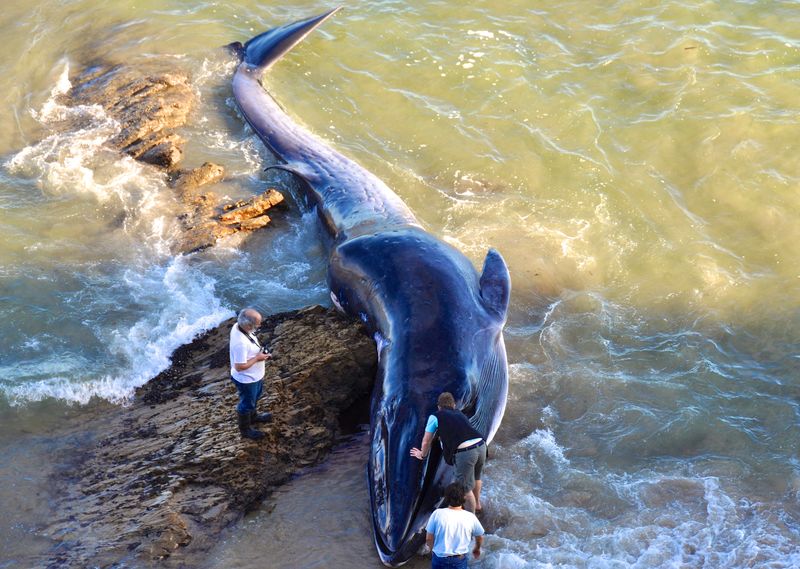
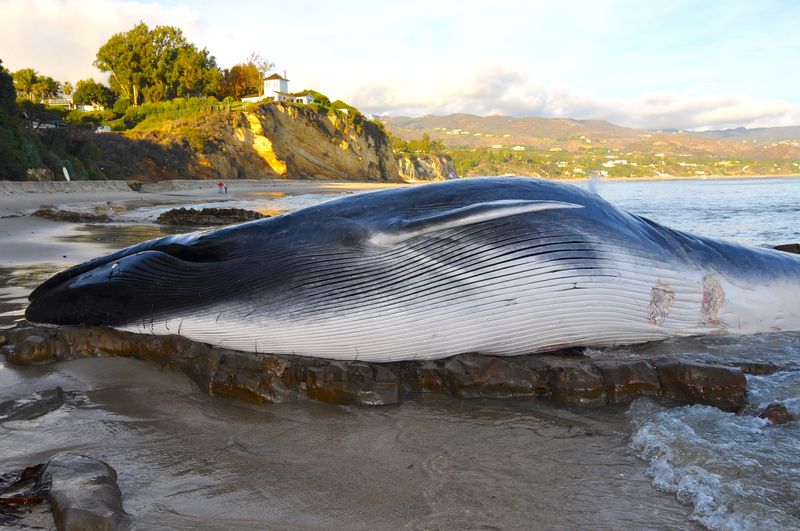
    ADDENDUM  THOUGHTS AND STUNNING PHOTOS OF THE WHALE

     Julie Ellerton, a photo-journalist from Malibu, spent several hours with the whale. Her stunning photographs capture for me the poignancy of the whale's magnificence and fragility, two seemingly opposing descriptions and yet the poetic essence of what nature's gifts can be. What we purposefully did not include are images of children who climbed the whale's carcass, as if it wee a jungle gym.  Nor did we  include the images of the hackers who took their knives to the whale's surface– hunting for bones and meat.  The image here offers the viewer and reader a chance to see the whale, bruised but intact. The photo can provide a proper closing for the whale while it lay between a simple sad but inevitable death, and before the accost which ultimately provided entertainment for some, and bureaucratic posturing for others.  This is as close to how we might have seen it as it should be seen– alive and well under the surface of the sea. Thank you Julie for sharing your photos. NAMASTE.


    A WHALE OF A TIME

    The
    mammal had come in with the tide six days prior, reportedly disabled and
    injured from an apparent hit on its back, causing a bruised spine. Not a
    surprise, I thought, since smugglers and pangas in various sizes had been patrolling. One might have hit the creature, and run. A hit
    and run. It seems to me it’s up to the state to address smugglers along the
    California coast who might be guilty of such a heinous crime. A crime that takes
    place in the waters where cetaceans have made a bi-annual migration for centuries. Waters bearing "sea life" to coves such as the one at the end of my street.

     Last
    I saw the dead 40-foot blue fin whale was on Saturday, the 8th.  A dim December afternoon light merged a milky background of sky and sea; in the foreground the creature was decomposed in a
    wretched heap. From the cliff atop the short palisade the stench of the carcass
    held steady. Below, a small crowd of some twenty or so had gathered outside the
    roped off remains while inside the bone
    thieves
    wielded their long knives and machetes—hacking, tearing,
    disrespecting.  Waving their tools, and
    hacking at the decayed flesh:  answering
    questions of the crowd as though they were just friendly shoppers.  Multitasking and without pause they carved
    away the flesh, and dug out valuable pieces of bone: potential loot and profit
    for them; satisfying for the “curious” and the “collector, a story as old as
    whales and man, a rather cruel, vicious and archaic one. Was this for real? In
    my crib called Malibu?

     Earlier
    in the week you could smell the meaty rot of the whale combined with pungent
    salty brine waft down the street that leads to the cliff where I now stood. I
    had stayed away when I heard from a neighbor the whale was still showing signs
    of life, its fluke raising and falling with the tidal rhythms.  I couldn’t bear that, and I cowardly watched
    the creature’s fate from the computer. Now that I was there I didn’t recognize any of the onlookers below as my
    neighbors. A dying, now dead, whale had become a lurid attraction for tourists,
    and a treasure chest for ocean grave robbers. 

     The
    reason I didn’t see my neighbors is because they were home frantically sending emails
    to raise money to pay a private boat company to remove the remains of the still
    whale and return it to its natural habitat. Forty-five minutes after I left
    this horrid view the boat came to take the offal away. I was told it would be
    carried some 15 miles out—away from the current—to be returned to its natural
    habitat and the natural cycle of the food chain.

     Speaking of food chain, isn’t it up to
    the state officials or local agencies to address the potential sanitation and
    safety challenges a decomposing whale leaves behind? It is common knowledge that whale
    oil is an “e-ticket” shark attraction. 
    Maybe the folks at city hall will worry about that when the millions of
    ocean going tourists who pass thru Malibu each year (providing much needed
    revenue) become “chum.”

    While a discussion was underway,
    there was seemingly no negotiation between the public officials or agencies about
    an honorable removal of the whale from our beach. Not even in the face of international
    news.  What wasn’t clear to the state, or
    any other local agency is exactly on whose territory (i.e. jurisdiction) the whale
    lay. Was its deathbed on private sand,
    or in fact, public?  A timeless and
    constant discourse for California coastal huggers.  Low tide or high tide? Where does the public
    line meet the private? (The bureaucrats need only to turn to the paparazzi to
    know for sure!).

     Despite
    the lack of bureaucratic resolve, it was the locals, the villagers,
    neighbors
    who altered this depressing picture. Demonstrating community
    spirit, humanitarian resolve and leadership, concepts our elected officials
    just couldn’t grasp, it was Point Dume residents who hired a boat to take the
    blue fin home. I honor these folks who showed heart and conscience.  Thank you.

     Is
    this a “whale of a tale” to rival “Moby Dick”? Hardly, but bone thieves,
    bureaucrats, smugglers and beach rights… all addressed in the wake of a broken
    creature. An age-old kind of a story in a contemporary setting: it is
    compelling and tragic, and unfortunately true. But I do like the ending: a communal
    “clan” that sets an example for others, leaving an indelible “positive” mark in
    the sand.


    SNEAK PREVIEW FOR NEXT POST:

    AN ARTIST'S VOYEURAMA 

    Photo (8)


VIEW MORE BLOG POSTS